.jpg)

.png)
LASALLE’s Rock and Indie Festival: Behind-the-Scenes with the Head of Festival
Within the first hour of arriving at the festival, IAAS Music’s work began as we met with Stella Ong, the Head of Festival.
Stella is a Second-year BA (Hons) Arts Management student from LASALLE College of the Arts, Singapore, the institution hosting the Rock and Indie Festival (RIF). She’s amicable and professional, generously taking us on a tour of the Festival Village and venues before taking us to the Annex that would later become my second home – tune back in soon for those artist interviews!
For today, you’ll get to hear more about this wholly student-planned festival. This peek behind the curtain is a little longer than our usual, but bear with us! So much more than we think goes into these events, and lots of what Stella brought up surprised me, even as someone interested in the music business.
Whether you’re an artist, festivalgoer, or someone hoping to throw your own grassroots music festival, this exclusive peek behind the curtains certainly promises intrigue.
(This interview has been edited for clarity and length.)
Stella, thanks so much for taking time to sit down and chat with us at IAAS Music! We know it must be crazy busy for you today, being the opening day of LASALLE’s Rock and Indie Festival (RIF).
The Festival has curated a hugely diverse lineup of artists. When genre isn’t really a limitation in who you can choose for the festival, what makes an artist stand out and make you think, I’ve got to book them?
Most of us who curate this festival also do attend local gigs! So we know how these local artists play, what their stage presence is like, [and] what their music is like. I suppose from there, we have some sort of bias because we know, like, this artist plays really well, we can get them on.
We also compiled a really long list of local artists, from really big names to smaller emerging artists or even some who are currently students at LASALLE as well. [Then] we shortlist and see who we can get on for this festival.
We aren’t really looking at what genre they play, but rather more of their original music and [ability] to perform in our venues as well.
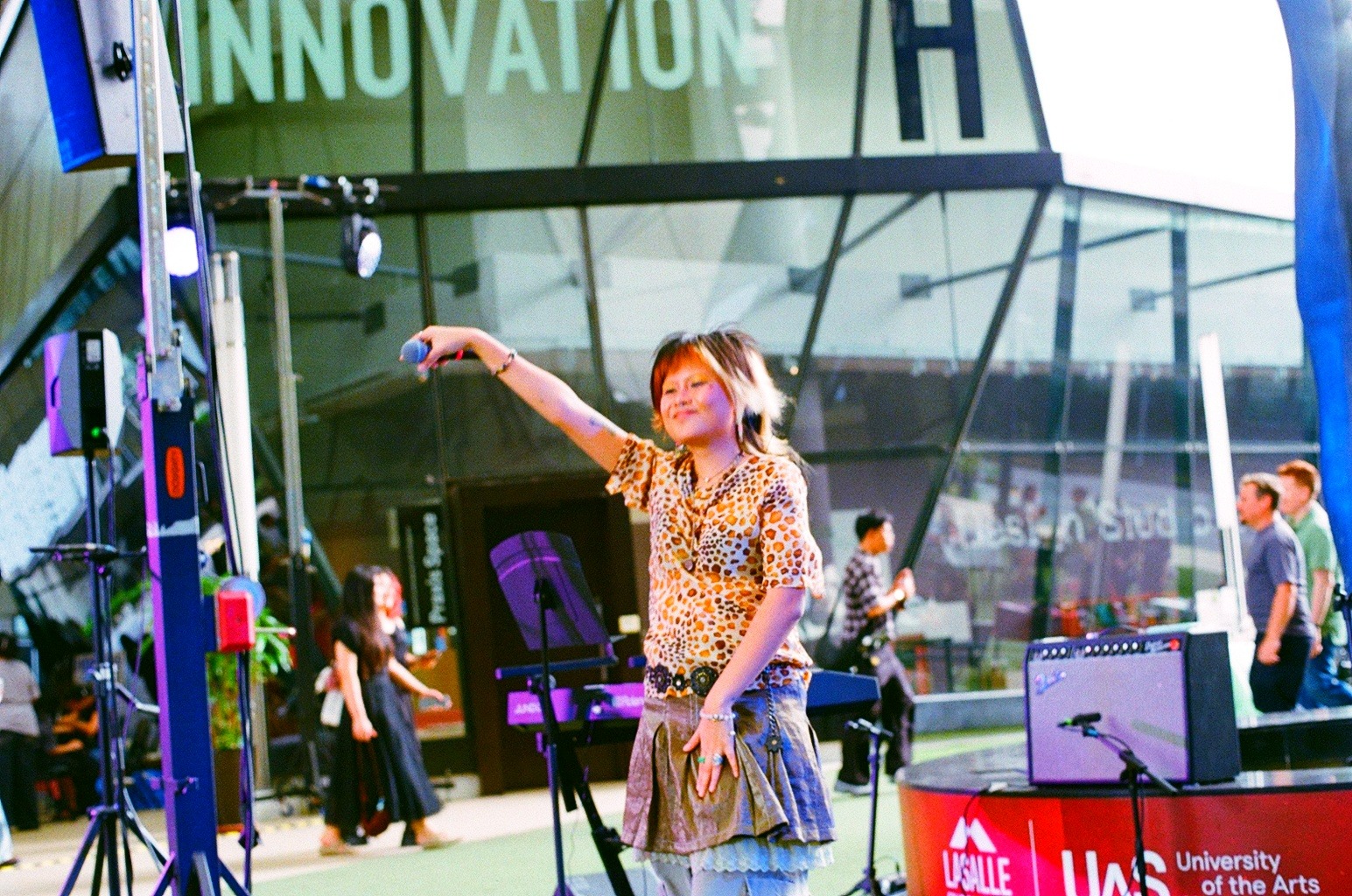
Interesting! If you’re a newer artist reading this – being seen and having a solid discography could be your ticket to getting booked.
I guess that leads us into the next question: what was the biggest challenge you faced, and hardest choice you made, while putting this together?
It was really hard for me, because it was my first time working with such a huge group internally – my team consists of my Arts Management classmates and juniors, as well as some students from the new BA (Hons) Music Business course. It’s like working with a whole class of almost 30 people.
We also had to reach out to not just artists, but also external vendors for our Festival Village. We had to liaise about everything ourselves with the school and [so many departments]. It can be a bit difficult sometimes because everyone’s just not saying the same thing. So, I think that was my biggest challenge.
In terms of the hardest choice we had to make, I think it was curating the line-up. We were thinking about how we could make the line-up such that we don’t have too many of the same acts playing similar music. We want to have variety, but there are also certain limitations that we are unable to bypass.
I’d say you succeeded! There was something for everyone at RIF this year, including two friends who came down on my recommendation. Still, though, could you share more about what limitations you want to consider?
When we curate for our Campus Green [outdoor venue] and our Flexi [indoor Flexible Performance Space] spaces, they’re all suitable for very different genres.
The Flexi is more full-band, like rock and such. But the Campus Green is more singer-songwriter pop and stuff. So to create the line-up, we had to see which act could fit in which venue – or could some acts do both venues?
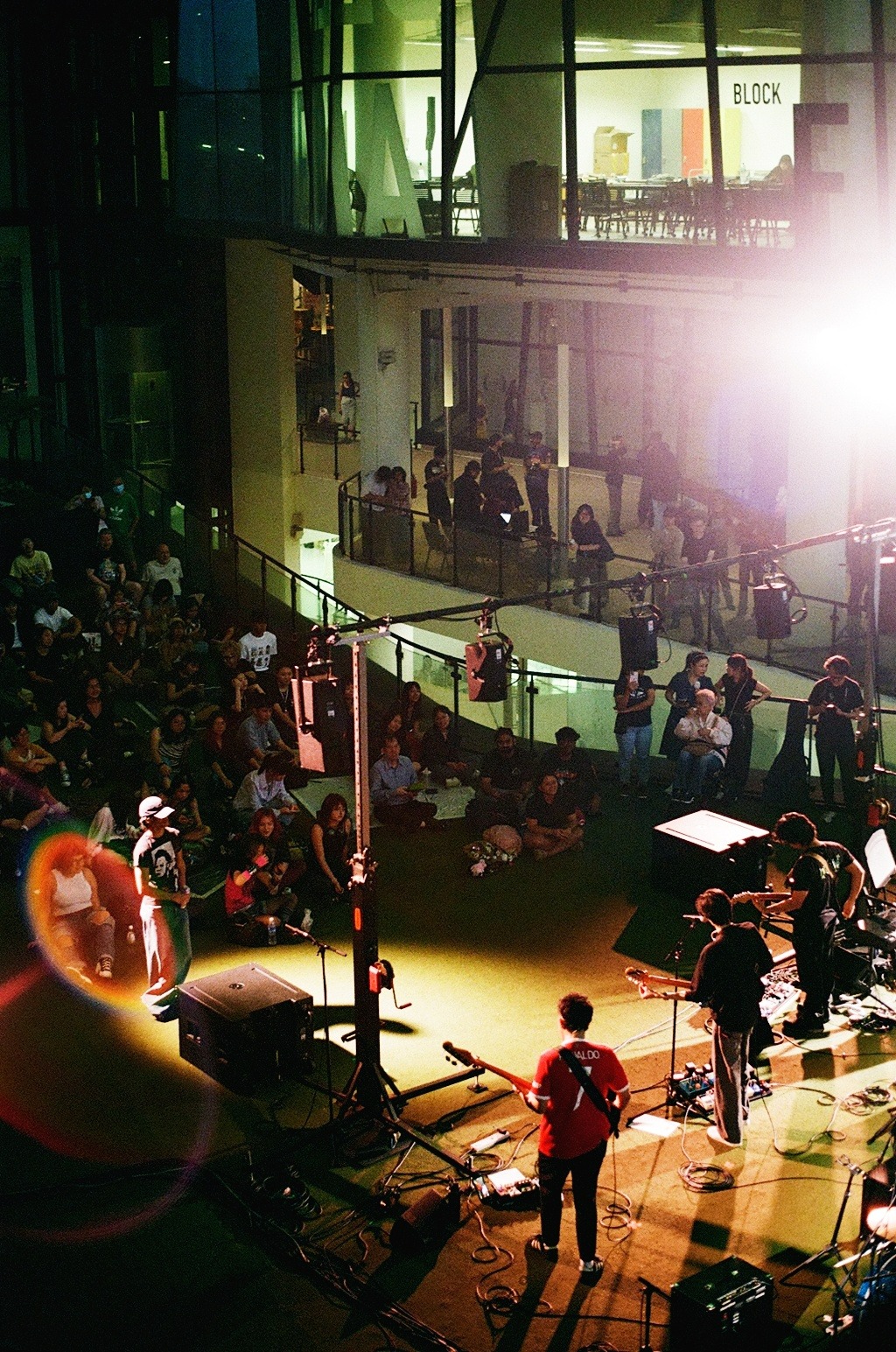
Sometimes we’d assign a certain venue, and then the band would be like, “Actually, no, I want to play here instead because I’m going to be playing an acoustic set.” Then we’re like, “What? I thought you were playing a full band set?”
Or halfway through they’ll change their mind and be like, “Actually, we want to play a full band set.” So it’s a bit challenging for us too. And we’ve been planning a whole festival since July last year! So it has taken us a very long time to get to this point today in the festival.
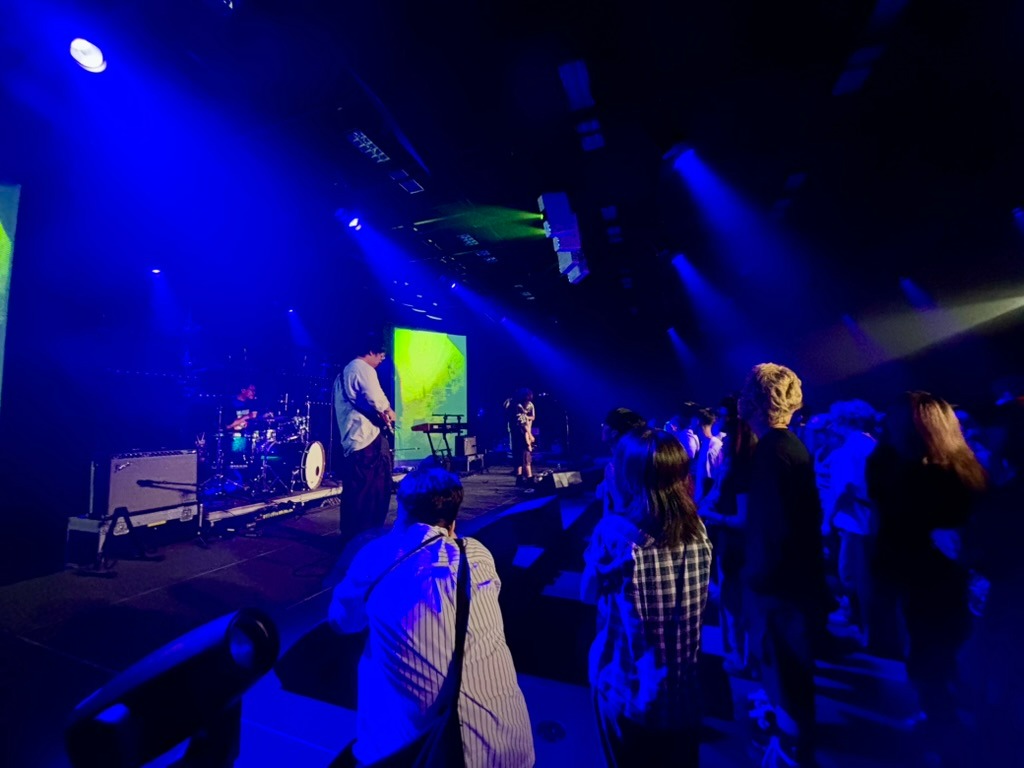
It sounds incredibly tough. Is there any moment where it became all worth it for you? Your favourite moment in this whole planning stage?
Maybe just… seeing the whole festival come together. When we were setting up yesterday, it was just a ‘wow’ moment – I can’t believe that it’s really happening, even today. Like, whoa, you guys are here for the festival like – that’s crazy. Or the people setting up their booths now.
We were uncertain about so much, especially because the Head of Marketing in the RIF committee and I were both on an exchange semester abroad. Majority of the festival was planned while I was overseas, so it’s also my first time seeing my whole team.
I suppose this is as good a moment as any to ask, and I’m sure that many of our readers who either attend or play festivals will be interested to hear your answer! What surprised you about taking on the role of Festival Head?
Definitely the fact that I’m not even going to be in Singapore! During the interview with the previous year’s [student] committee, I was like, “You know, you don’t have to choose me because I’m going to be away. Literally, it’s going to be really hard, especially with the time difference and everything.” And when I was appointed, I was like, “Wow, I cannot believe you guys decided to do that to me.”
Also, how much liaising is involved with all the different admins in school! The comms [communications] team, we had to reach out directly. The facilities, we had to directly contact them – for all these little fixtures, lights, tables, chairs… It was such a challenge.
At the same time, there’s very little guidance on our side from the Arts Management department in planning RIF, which surprised us since this festival is considered to be a collaboration between the School of Creative Industries (SOCI) faculty and School of Contemporary Music (SOCM) faculty. So it’s also like, who’s calling the shots?
We report to two lecturers from the SOCM faculty, but most of the time they’re busy with their lessons and other things. So a lot of the planning had to come from us, which surprised us because we had to figure out all the stuff we didn’t know.
But that’s the beauty of it being a student-led festival – it’s 100% organically planned by students, and there’s no control, in a way. Teachers don’t say, “Oh, you can’t pick this artist, you can’t do that.” We have pretty much almost full control of what’s going on at the festival.
Sounds exciting and scary – but that just means you guys have an even better handle on what young people would want at the festival, being part of that demographic yourselves.
And I must say that when I arrived earlier, I was shocked at how put-together everything was!
Wow, thank you. I really was not expecting the festival to be good. It’s student-led, and it’s our first time doing this for a lot of us. So we couldn’t have any high expectations like oh, this is going to be Baybeats [Singapore’s largest alternative music festival] or Tomorrowland [major EDM festival held in Antwerp, Belgium]. There’s no way this would be like that, so I think it’s okay for everyone to make mistakes. We all do!
Set your expectations low, but also be brave to just try and throw whatever ideas you have out in the air. We had this huge idea to bring food trucks in this year, which we wanted last year but just didn’t we couldn’t arrange for. This year, we really tried but still couldn’t do it – though at least this time, we have food and beverage vendors. And that’s something new [for the festival]!
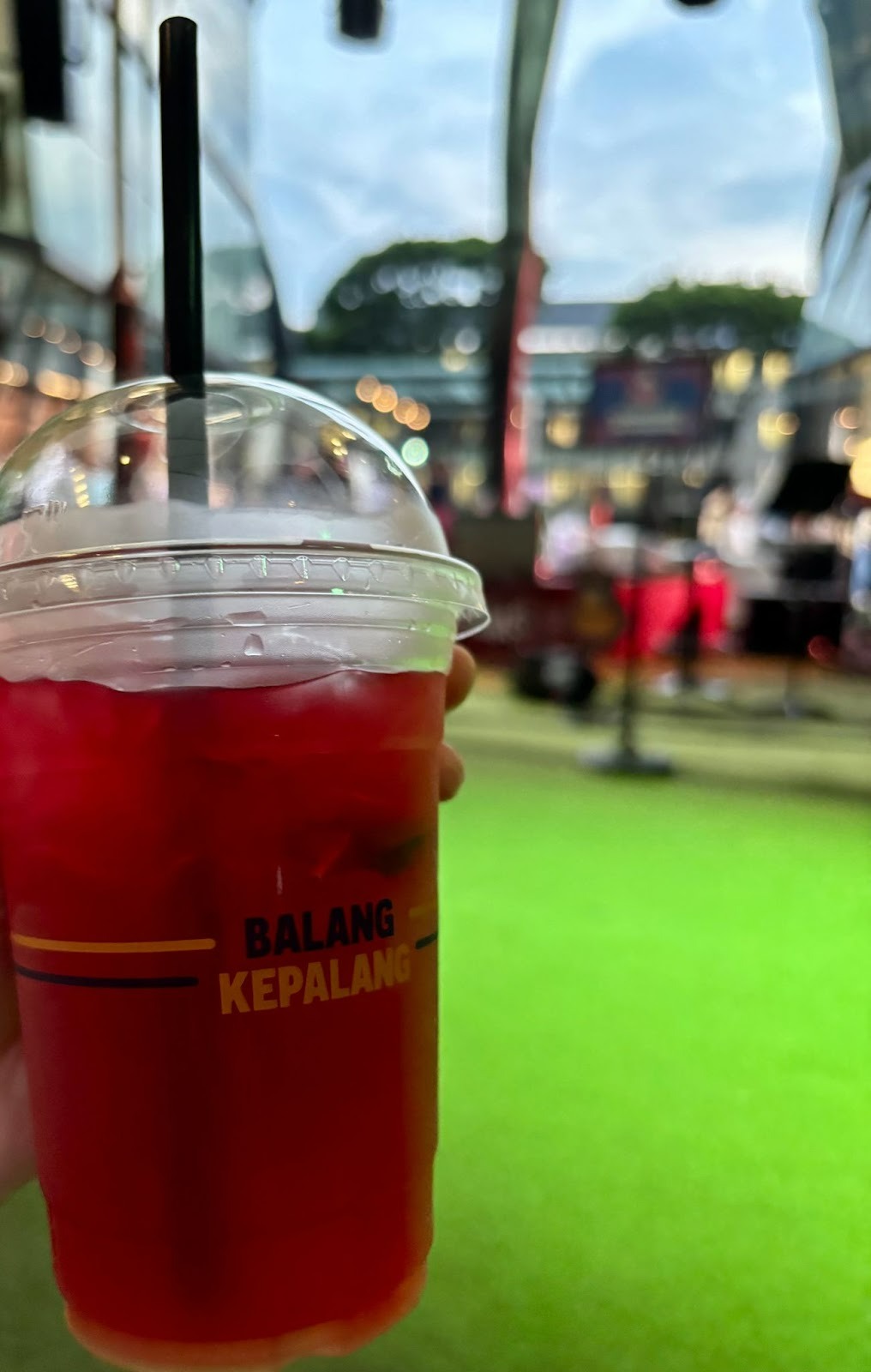
We’ve also tried a lot of ideas when we were making the activities. [Most] didn’t exist during last year’s festival. It came with a lot of not knowing if this would work, but just cold-calling and emailing people to ask, “Hey, are you keen to do this with us?” So I believe this year’s RIF might have the most partnerships and sponsorships.
I think I saw some while walking around earlier! Can you tell us more about the activities and sponsorships? I wrote about this briefly during my coverage of Day 1, but the Festival Village surprised me. I really expected to just come and catch some good music.
Yes! We have this activity where you can do the stamp rally, which is basically to complete little cards and then get stamps. Once you finish that card, you can do a lucky draw and either get some snacks or vouchers from our sponsors. You can get a 2-hour free jam studio session, or food and beverage vouchers from the vendors working with us. You can win Marshall Monitor 2 A&C headphones!
Wow! I’ll definitely be trying my luck.
(laughs) Yes, go ahead. I mean, it’s free to try.
It’s [another] new thing we didn’t have last year. We had the stamp rally, but it wasn’t to this extent. So we really tried very hard with it. Oh, and the headphones are, like, $500 by the way.

It’s crazy. You guys really cold-called everyone.
Some people also reached out to us and we were like, okay, let’s see what we can do. We also have a guitar repair booth by this guy called Wax. People can just bring their guitars down and he’ll help to service the guitars. He does a good job, you know – and it’s for free. And then we also have the fashion activities, where you can pledge [for sustainable fashion choices], for example: “I will wear it and share it”.
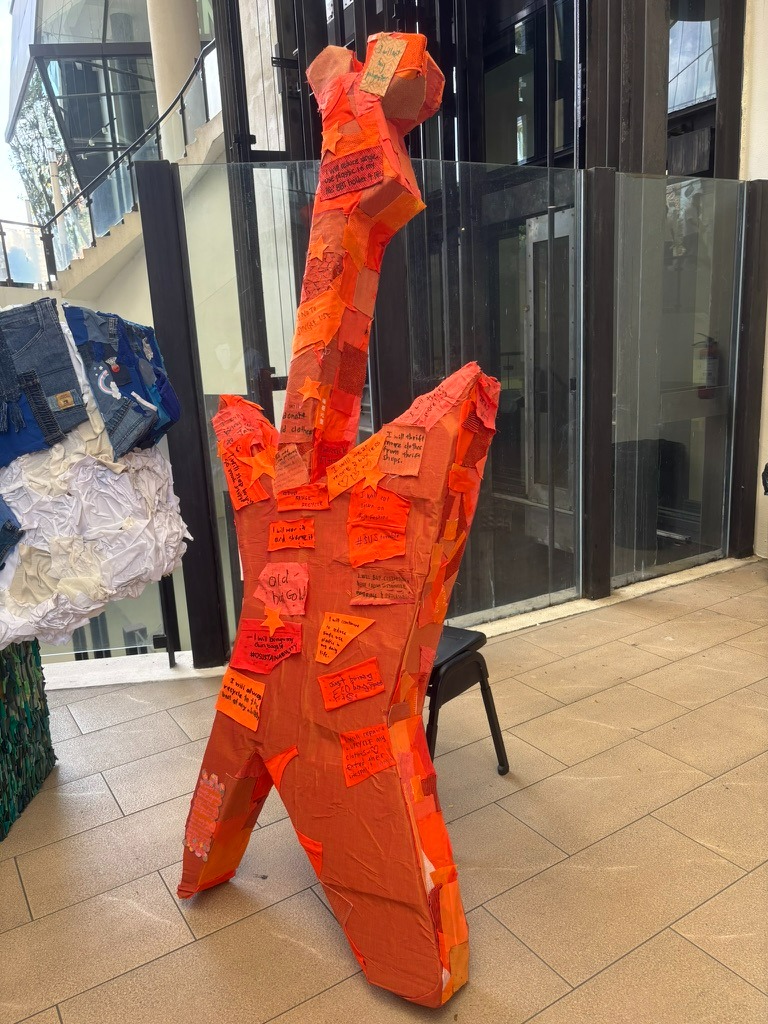
There’s also a DIY guitar pick keychain activity, and people selling crafts, and caricatures… And of course F&B. So it’s really, wow, we have a lot going on set.
Wow! I’ll have to go check it out later between sets.
This is more logistical – could I ask how much of the funding comes from the school, and how much comes from sponsorships?
Our sponsorships are all in-kind donations. So that means there’s no monetary sponsorship, but they provide products or services. The money that we used was totally from our school [LASALLE], so we did have to stick within a certain budget.
Limitations make you more creative, sometimes – but it definitely doesn’t look like it affected the quality of the experiences at all!
It’s been a lovely chat, but I’m afraid we have to run for Masha Nyanna and More People’s set – thank you so much for your time, Stella!
If you’re hoping to keep up with or attend RIF next year, you can find them on Instagram @lasallerif. For exclusive photos and videos of RIF, including backstage POVs, follow us on Instagram @iaas_music!
And if you’re new here, check out our Day 1 and Day 2 coverage of RIF. We’ve still got a treat with a few more interviews conducted at RIF in the works, so tune in for those too!






Login or register to join the conversation.
Join the discussion
0 comments