.jpg)

.png)
Last year, my middle-aged schoolteacher called my music taste older than her mother’s. She wasn’t exactly wrong, though at the time I hadn’t known whether to take it as a compliment or be mildly affronted. My grandparents are in their 80s, and I’d grown up on the music of the 60s, from Anne Murray to Skeeter Davis.
Something about those works is just timeless. My grandfather speaks very little English and first heard these songs through a radio or tinny vinyl in Medan, Indonesia; I grew up some fifty years later in Singapore, and we’d listen to these together on the living room Bose speaker off Spotify.
It’s not a very common sound nowadays, though I’ve managed to convince a few friends to listen through the playlist I maintain for my grandparents named ‘boomer mix’. So imagine my surprise when I began to observe a resurgence in recent releases inspired by this era – and the resounding response to it.
Before I dive into today’s songs, though, we’ll have to go back to the source.
Records produced in that era have this unique, warm analog sound I don’t really hear today. I consider it a sweet spot of a time where stereo and multi-tracks were becoming more prevalent, improving recording quality – but before the digital recordings and electronic synths of the 70s and mostly the 80s took over. A few genres dominate my second-hand experience of this era:
1. Jazz-inspired big band arrangements, full of brass and using brushes for percussion (Beyond the Sea by Bobby Darin);
2. Country music, with piano riffs, gentle strings, and lush backing vocals (Green Green Grass of Home by Tom Jones);
3. Bands – sometimes mellow, sometimes rock-and-roll – in a standard format of drums, electric/acoustic guitars, bass guitar, keyboard and vocals (Eight Days A Week and Here Comes The Sun by The Beatles, Johnny B. Goode by Chuck Berry);
4. and orchestral, cinematic crooner styles (The Last Waltz by Engelbert Humperndinck, Blueberry Hill by Skeeter Davis).
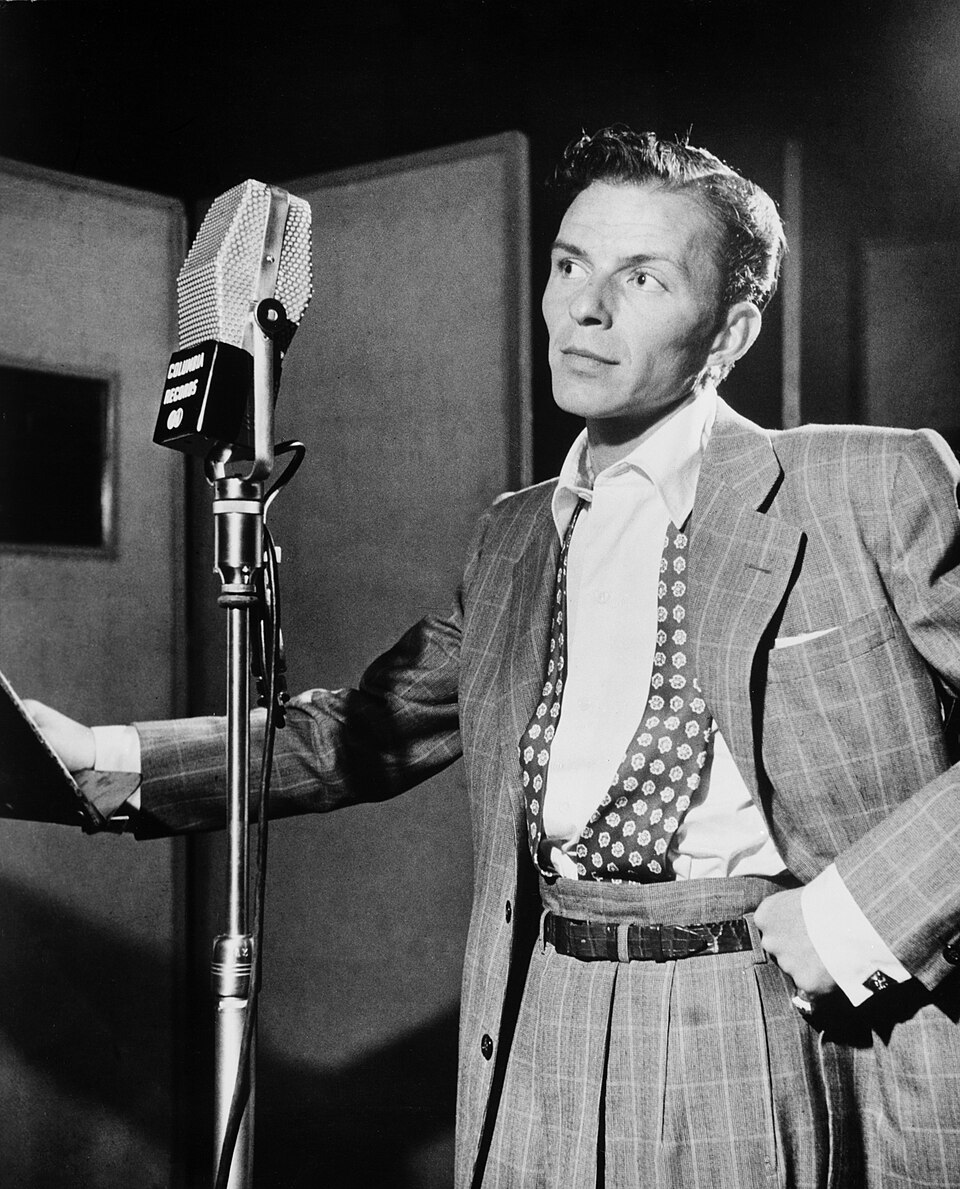
Needless to say, this list is non-exhaustive – I could devote this entire article to other sub-genres and other iconic artists I like, such as The Beach Boys. Happily, this genre diversity is reflected today – not just in streaming numbers and TikTok trends, though Connie Francis’s Pretty Little Baby did have its moment not too long ago, but in new music released within the last several years.
Stephen Sanchez first brought this phenomenon to my attention with his 2021 smash hit Until I Found You, featuring a smooth electric guitar and deep crooning vocals. At its peak, it soundtracked everything from declarations of love for people’s pets to actual wedding vows.
In my multi-generational household, though, it went multi-platinum; I first heard it when my friends hijacked my speaker to blast it during a hangout, my mother heard it on Instagram Reels and loved it, and then I showed it to my grandparents. They couldn’t believe it when I told them Sanchez was just 19 and had released the song that year. Even my grandfather, who loves to complain lightheartedly about how they “don’t make music like this any more”, couldn’t understand why anyone remotely my age would be inspired by 60s music.
It was something unique that lots of us hadn’t heard in a while, if ever. I hesitate to call Until I Found You ‘fresh’, given that he drew on a decades-long established sound – perhaps ‘refreshing’ would be more apt. Either way, Sanchez, who had been indie until the year before this dropped, would find his niche here and go on to release his similarly-styled debut album Angel Face.
Elliott James Reay, too, found fame at 22 years old with his 2024 single I Think They Call This Love. Although it initially went viral for its resemblance to Elvis Presley’s music, I found myself more interested in the story behind the song. Reay’s label initially wanted him to go for a more marketable, contemporary sound; instead, he committed to his inspirations and recorded as much of the acoustic instrumentation to tape as possible, giving the whole record that warm, analog tone. It certainly made the record stand out among my playlist while being easy on the ears – I remember looping it while working on research papers. I confess that I didn’t keep up with much of the reception to this – though it was everywhere on Instagram Reels, which is how I discovered the song in the first place. My grandparents did also love this song, though – and I consider that the true litmus test for any piece of 60s-inspired music.
In terms of rock-and-roll, Top Gun Maverick in 2022 introduced a lot of my generation to Great Balls of Fire through Miles Teller belting on the piano in a call-back to the iconic original film. I still remember how people at school knew the lyrics and would sing along.
Another rock-and-roll band release would be Lyons Lane’s reimagining of Love Potion No. 9 in 2024, also under the rock-and-roll umbrella – it’s unfairly catchy, and I wish it were longer. And a bonus for this magazine is that they’re indie – I realised while doing research for this feature that the majority of the artists I’d named were represented by major labels.
That year, then-82-year-old composer Morton Block (also indie!) gained huge traction on TikTok for his brassy song ‘My Love’. It’s definitely authentic to the era – Block had written the song in 1958 for his wife while he was in the navy, with the lyrics directly taken from his love letters to her. Only in 2022, though, was it recorded and released on streaming by his jazz label-owner grandson Matt Block. Block Sr.’s earnest promotion, accompanied by film footage of the couple on their honeymoon, landed on my For You Page that year in a legendary mid-scroll find.
And again this song transcended age boundaries. I’d expected people my grandparents’ age to enjoy it, or maybe even some nostalgic Gen X-ers – but a huge portion of my generation found the story wholesome and the music enjoyable. As the meme goes, if I got a cent every time this happened, I’d have two cents to date – which isn’t a lot, but it’s weird that it happened twice. Block himself told Madeline Merinuk of TODAY, “I really can’t tell you what the average age of TikTokers are, but I can tell you it’s not people who are 82 years old.”
I’d have written these songs off as rare breakout hits - especially since Great Balls of Fire had the heft of the Top Gun franchise behind it. Except lightning struck again twice – and uniquely, where Sanchez, Reay and Block had no particular target audience, I’d call the next two songs more focused on a younger millennial and Gen Z demographic.
_(53120163026).jpg)
Last year, RAYE made waves with her smash hit WHERE IS MY HUSBAND!. Described as a brassy call-back to the girl groups of the 1960s, it was recorded – and usually performed live – with real instruments at great cost that I’d argue has paid off tremendously. Since I conceptualised this article, this single has shot to No. 1 on the UK charts as of January 2nd; I’m still seeing so many trends around it, from attempting the chorus riff on various instruments to people lamenting the current dating market. It’s stayed pretty youth-focused and -driven, though I do recall seeing RAYE post a TikTok with her grandmother and the performances are very glamorous.
The real surprise was having the 1960s be back… in K-pop.
There’s a lot of genre diversity in that industry, but I usually think of ballads or my favourite groups’ more electronic, modern sounds. If they drew inspiration from the 60s, I would have imagined they’d draw from big band or rock and roll instead.
Instead, BOYNEXTDOOR’s 123-78 is a boyish love song heavily inspired by the brass arrangements of the 60s, coincidentally naming Georgia as a love interest as Sanchez did.
.jpg)
Sonically, I’d compare it to being a more cheery version of Morton Block’s aforementioned single – but where this song really shines in its performance. As expected from a group of their calibre, each performance’s immaculate choreography is energetic, youthful and classy – best observed in their casual dance practice video. As a casual listener since debut, this sound came out of left field for me to really exemplify the return of the 1960s.
For the uninitiated, K-pop historically tends to follow the market in sound and concept – whether that means observing trends, or creating them. So to have 123-78 promoted heavily as a double title track to their album, and not just relegated to a B-side as more experimental tracks tend to be, feels pretty significant to me.
My grandmother enjoyed this particular song more than my grandfather did, though the promotions intrigued her. It’s almost anachronistic, to see such a dated sound (albeit cleaned up by modern technology) marketed through TikTok dance challenges – and in Korean, for a genre my grandparents and I experienced primarily in English. Though I must say it’s paid off; the adorable partner dance break towards the end during the brass instrumental had my entire feed filled with people both in and out of Korea recreating the dance with their partners or best friends.
That was a long recap of the trend – which hopefully shows how deep it runs, beyond just one or two one-hit wonders in the genre. Writing all that had me thinking – what does this signal in the wider market?
A couple things, if I could take a stab as someone who’s been observing this trend over the years. First, reinforcing the crucial role social media plays in making or breaking a record. I’ve named a mix of indie and major-label artists in this article, and the common thread in their success was social media. Whether it was clever promotion, word-of-mouth, or trends, I discovered all these artists through Instagram and TikTok. Indie artists reading this will be familiar with the trials of social media algorithms – yet, when you get it right as Morton Block did or blow up a repeatable dance as BOYNEXTDOOR did, it can catapult a song into social media public consciousness, make a career, or keep it up longer on the charts. This is particularly valuable for bringing a new sound into public consciousness and amplifying the signal of good music.
Second, the return of the analog recording feels like a response to the electronic sounds we’ve come to associate with pop and a deluge of other genres. ‘Electronic’ here doesn’t just refer to the huge synths in electronic dance music or dance pop, but instead how a lot of music leans on plugins and samples in place of recording real instruments.
As a bedroom producer, I can understand why and actually think this is a good thing. It lowers the barrier to entry to creating a piece of music – instead of having to purchase my own bass, for instance, I can load up a VST on Garageband and play through a keyboard instead. For drums, renting a studio with an acoustic drumset can go up to a prohibitive 80 SGD (46 GBP) an hour without even adding in the cost of a session drummer. With this convenience comes a huge trade-off in authenticity, as Rob pointed out in his review of my own single – it’s pretty obvious when a plugin was used in place of a session player.
When we consider times or genres where electronica is the highlight, consumed over streaming rather than physical mediums – think the 2010s (Beauty and a Beat by Justin Bieber) and even 2020s (brat by Charli XCX) – it’s no wonder we’re all looking for some analog sounds. Rob also wrote an article on Olivia Dean’s rise in contemporary pop music, and I’ve got a gut feeling this is at least tangentially connected.
At the end of the day, I think this resurgence is just about balance. No genre or era is particularly ‘better’ than the other, just different. I’m excited to see what genres make a comeback next, and which artists can put their own unique spin on them next.
And just like Reay’s commitment to honouring the analog recording process, this nostalgia for very analog, wholesome songs about love definitely comes from somewhere we should all be paying attention to.
I’ve referenced a lot of songs and artists in this article – you can find them all, plus some personal favourites, in a Spotify playlist here.



Login or register to join the conversation.
Join the discussion
0 comments